

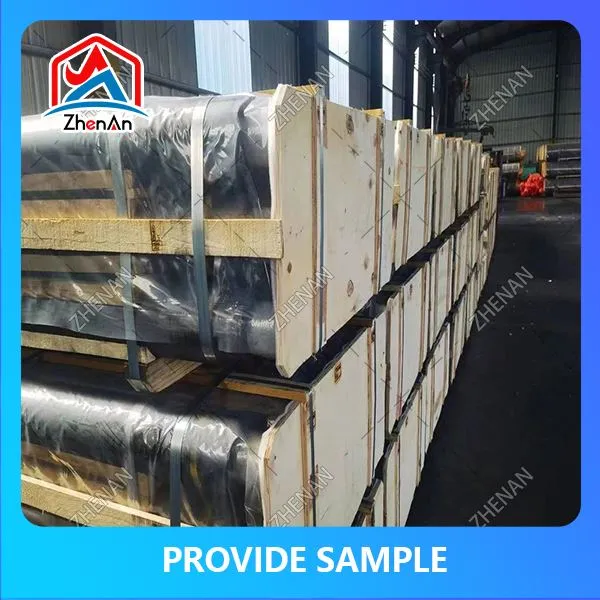
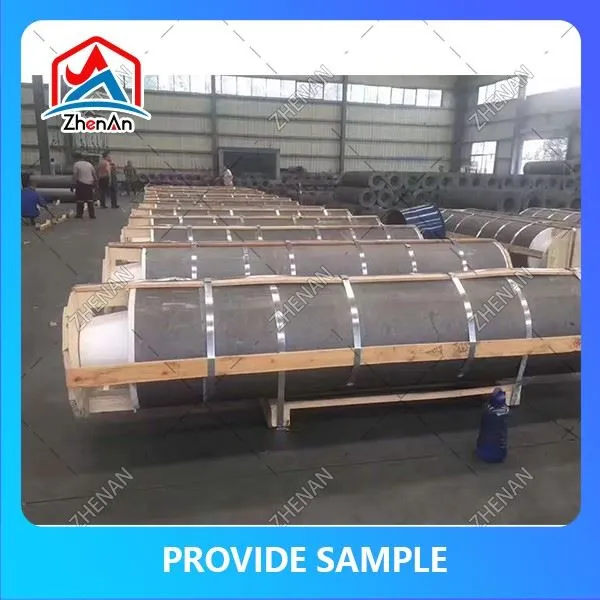
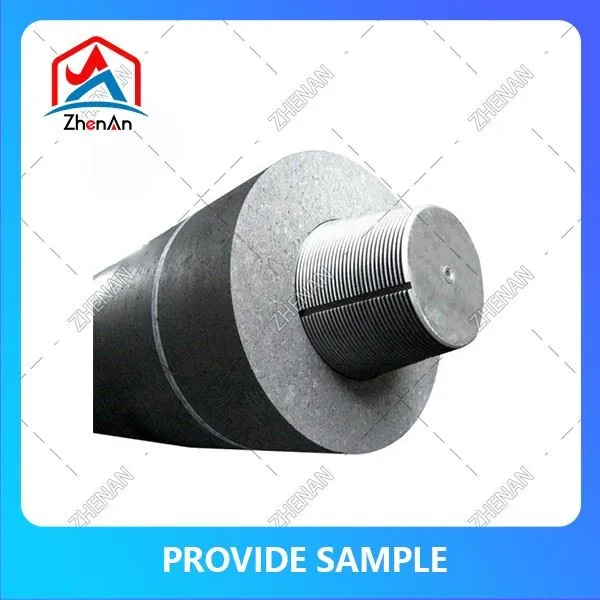
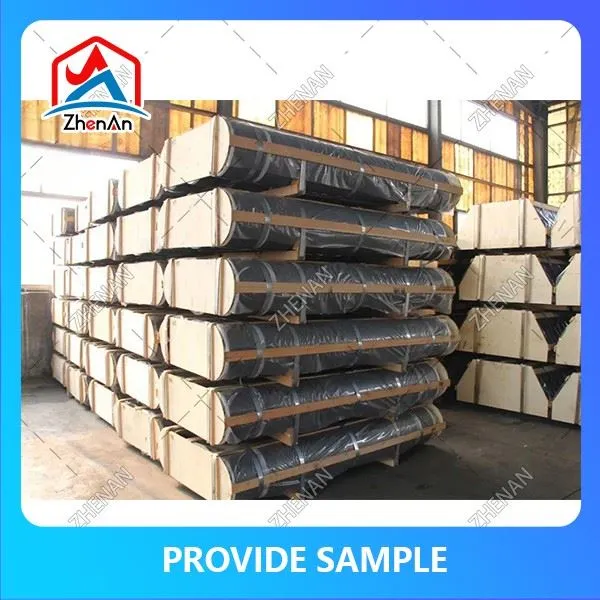
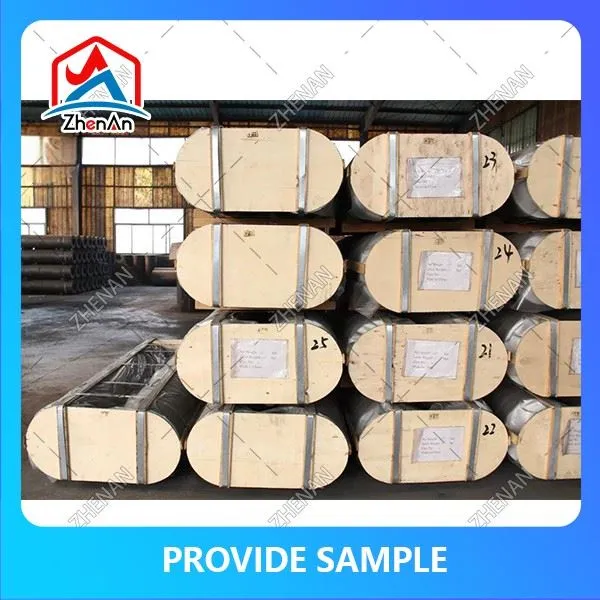
Electrodes En Graphite for Eaf Lf Furnace
| Nomina diameter | RP | HP | UHP | ||||
| Current Carrying Capacity | Current Density | Current Carrying Capacity | Current Density | Current Carrying Capacity | Current Density | ||
| in | mm | A | A/cm2 | A | A/cm2 | A | A/cm2 |
| 12 | 300 | 10000-13000 | 14-18 | 13000-17400 | 17-24 | 15000-22000 | 20-30 |
| 14 | 350 | 13500-18000 | 14-18 | 17400-24000 | 17-24 | 20000-30000 | 20-30 |
| 16 | 400 | 18000-23500 | 14-18 | 21000-31000 | 16-24 | 25000-40000 | 19-30 |
| 18 | 450 | 22000-27000 | 13-17 | 25000-40000 | 15-24 | 32000-45000 | 19-27 |
| 20 | 500 | 25000-32000 | 13-16 | 30000-48000 | 15-24 | 38000-55000 | 18-27 |
| 22 | 550 | 32000-40000 | 13-16 | 35000-55000 | 14-22 | 42000-64000 | 17-26 |
| 24 | 600 | 35000-41000 | 13-15 | 41000-61000 | 14-21 | 50000-73000 | 17-25 |
| 28 | 700 | 39000-48000 | 10-12 | 55000-82000 | 14-21 | 67000-99000 | 17-25 |
| 32 | 800 | 43000-54000 | 8-10 | / | / | / | / |
Welcome to contact us for quotation.
Address:Huafu Commercial Center, Wenfeng District, Anyang City, Henan Province, China
How do graphite electrodes function differently in EAF versus LF furnaces?
While both EAF and LF graphite electrodes conduct electricity, their operational roles and failure mechanisms differ significantly:
Energy Transfer Mechanism: In EAFs, electrodes drive exothermic arc reactions (electrical energy → heat via plasma), with the tip directly interacting with molten metal, causing rapid erosion. In LFs, electrodes act as resistive heaters (Joule heating), where current flows through the electrode and adjacent molten slag/metal, generating heat uniformly across the electrode tip and shaft.
Thermal Environment: EAF electrodes face extreme, localized temperatures (tip >3,000°C) due to arcs, leading to vaporization and tip shortening. LF electrodes operate in lower but more uniform temperatures (1,500–1,600°C), with heat distributed across a larger surface area, reducing localized erosion but increasing oxidation risk over time.
Interaction with Furnace Chemistry: EAF electrodes are exposed to reactive slag (high FeO, CaO) and molten metal droplets, accelerating chemical corrosion. LF electrodes interact with refined slag (lower FeO) but remain in contact with molten steel for extended periods, making them susceptible to sulfur pickup (from steel) or alkali metal penetration (e.g., Na, K), which weakens structure.
Lifespan Drivers: EAF electrode life is dominated by arc erosion (60–70% of total wear) and mechanical breakage. LF electrode life is primarily limited by oxidation (40–50%) and slow chemical degradation, with erosion playing a smaller role.


Hot Tags: electrodes en graphite for eaf lf furnace, China electrodes en graphite for eaf lf furnace manufacturers, suppliers, factory, 450mm graphite electrode for biomass energy production, 450mm graphite electrode for electronics manufacturing, 450mm graphite electrode for extrusion mold manufacturing, 450mm graphite electrode for injection mold manufacturing, 450mm graphite electrode for semiconductor production, 450mm graphite electrode for secondary use


